Enterprise AI has inherited the org chart of traditional enterprise IT, where a central team builds the solution and the business is expected to adopt it. That arrangement held up when code returned the same answer every time it ran, but generative models work differently, and deciding where AI belongs in a workflow is turning out to be a judgment call. In retail, that call depends on context a merchant or store lead often knows best, and the AI team's job is to give them a shared platform and guardrails to test it on.
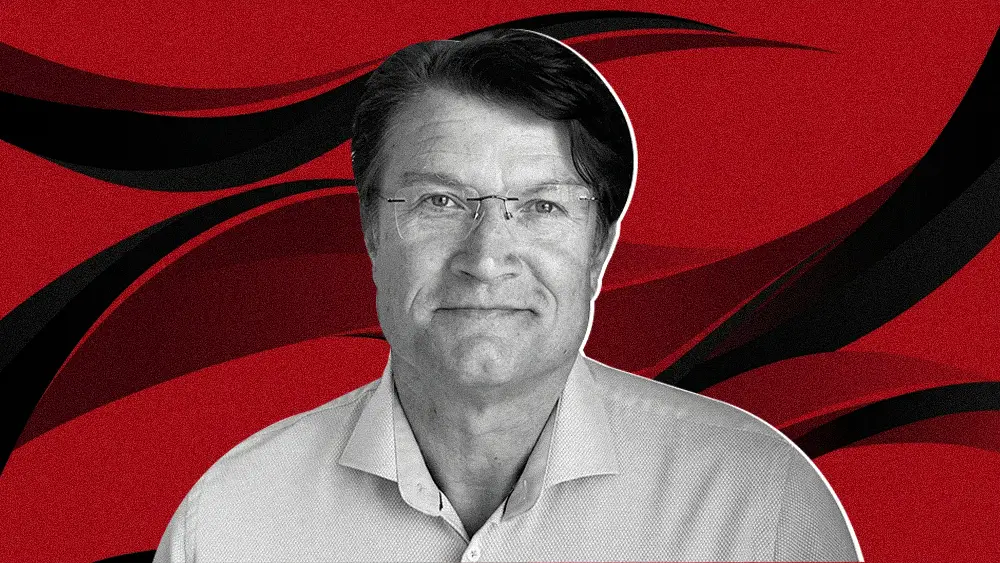
Diptendu Ray is Head of AI at a major Canadian retailer. He previously held senior product roles at Staples Canada and Indigo, where he managed checkout and buy-online-pickup-in-store products. He believes the people making decisions on the store floor need the tools to decide whether AI belongs in those decisions.
"For this to be done effectively, it has to be a decentralized approach. Most decisions are made on the floor at that exact moment, and those decisions have to weigh AI against non-AI solutions," Ray says. Many companies are building a centralized layer to control AI, and it holds up in certain cases. A central team can own the infrastructure and the guardrails, but it can't sit in every room where a staffing or merchandising call gets made.
Context lives on the store floor
A checkout button does the same thing every time a customer taps it, so the main debate on a software team was whether customers wanted it. Generative models give up that certainty, and Ray sees the software comparison fall apart once a model's answers start to vary. "With AI, a lot of the time the output itself is non-deterministic. Even if it could have been useful at 100% accuracy, it will not be 100% accurate, and people have to accept that challenge," he explains.
Headquarters can't write every useful answer in advance when the right answer depends on local context. A model can be technically accurate and still wrong for a particular store, and the person who knows whether a recommendation fits that location's inventory and staffing is usually standing on its floor. A model can be technically accurate and still wrong for a particular store, and the person who knows whether a recommendation fits that location's inventory and staffing is usually standing on its floor.
"There's no way to say with 100% confidence that this solution is going to work. Trying out a lot of different iterations, playing out a lot of different branches and then landing on what could work is the right way to proceed," Ray says. That testing works best in the hands of the team that owns the problem. Ray also wants strategy leaders to stop reaching for the solutions that have always worked, since many AI use cases only pay off once the process itself is redesigned.
What a good answer looks like
Once AI judgment spreads across the business, business expertise becomes part of how the system gets evaluated. Domain experts write the goldens, the ideal answers to real questions that show a model what good looks like, and help build the evaluations that test a system once it's in use. That role matters more when teams lean on synthetic data to fill holes in their history, since a model grading its own output has no outside standard to measure against.
"If the system generating the data is the same kind of system ingesting it, and the inferences are drawn from that same data, garbage in, garbage out can very quickly become a 100x problem. It's a self-fulfilling prophecy at that point. We need to rely on people who have been in the trenches and seen what is going on," Ray says.
The arrangement carries an incentive problem, since the experts whose knowledge makes the system valuable are being asked to help automate part of their own work. Retail buyers who spend weeks writing ideal answers for a merchandising model can fairly wonder whether they're training their replacements.
Ray's approach is to be upfront that their role will change and clear that a role remains for whoever helps build the system, the same bet IKEA made when it retrained 8,500 workers during its own AI shift.
Every team needs an AI owner
Moving judgment outward only works when accountability moves with it. Once AI starts shaping decisions that span merchandising, operations and data teams, someone inside each team has to answer for whether AI was the right tool and what happens when it's wrong. Uniform controls set at the center tend to push teams toward shadow development, while a clear owner keeps each decision traceable.
"Every team has to have a person debating whether AI, or any other technology, is the solution to a problem versus solving it through operations or other roles," Ray says. He describes that person as a high performer comfortable making the call on its merits, even when the familiar option is sitting right there. That owner also sees what a central dashboard misses. Digital channels give teams relatively clean signals about what an AI feature did, and a store floor is far messier.
"When you see the store like a customer sees it, it gives you a very different picture than when you only look at metrics on a dashboard. There are a lot of nuances in the store that are not captured properly with those metrics," he explains. Ray expects cheaper video analysis and heat mapping to sharpen that view, and he wants stronger A/B and multivariate testing so each team can measure whether a launch changed how customers behave.
Building the platform the business runs on
Five years ago the conversation centered on data democratization, and Ray expects AI democratization to follow many of the same fundamentals, starting with the role of whoever leads AI. "That person should not be too wired into solving specific use cases. That person should be able to think in terms of platforms which can enable people," Ray says.
The center keeps the infrastructure and the guardrails, built generic enough for teams to build on, with a clear line between what technical and non-technical builders can create. The teams decide where AI goes and remain accountable for how it performs. The industry is still working out what the chief AI officer role looks like.
Ray sees coaching as just as important as the platform. As adoption spreads, people across the business will take on different roles, and helping them approach that shift with curiosity falls to the AI leader too.
As AI gets more capable, more of the decision about where it belongs moves into the business. The payoff depends on how many people can make that call well. "That would require a lot of trust, and at the same time being really vigilant about asking those hard questions about where AI is the best solution, where humans are the best solution, and then designing people's roles and agents' roles accordingly," Ray says.